
LISEN Car Phone Holder Review: 30 Days With Auto Vacuum 3.0
For this LISEN car phone holder review, I used the Auto Vacuum 3.0 for 30 days in a 2022 AITO M5 with a Xiaomi 14 and an OEM MagSafe-compatible case. The test covered 58 hours and approximately 373 miles: 217 city and 155 highway miles. On both windshield glass and a textured dashboard area, suction formed in roughly three to five seconds and the base did not move or detach.
My verdict is recommended with conditions. It worked well in my test, but surface restrictions, occasional pump sound, no wireless phone charging, and mixed owner reports about longer-term reliability still matter.
That sounds like an obvious upgrade. On the right surface, it can be. The magnet is strong, the multi-axis arm is more useful than the stubby joints found on many compact mounts, and attaching a MagSafe iPhone takes one hand.
But the motor cannot fix a bad mounting surface. If your dashboard is curved, deeply textured, or covered in genuine leather, this is probably the wrong mount. Long-term ownership is also less predictable than the first installation may suggest: repeated pump noise, weakening battery performance, and loss of suction are the problems worth watching for.
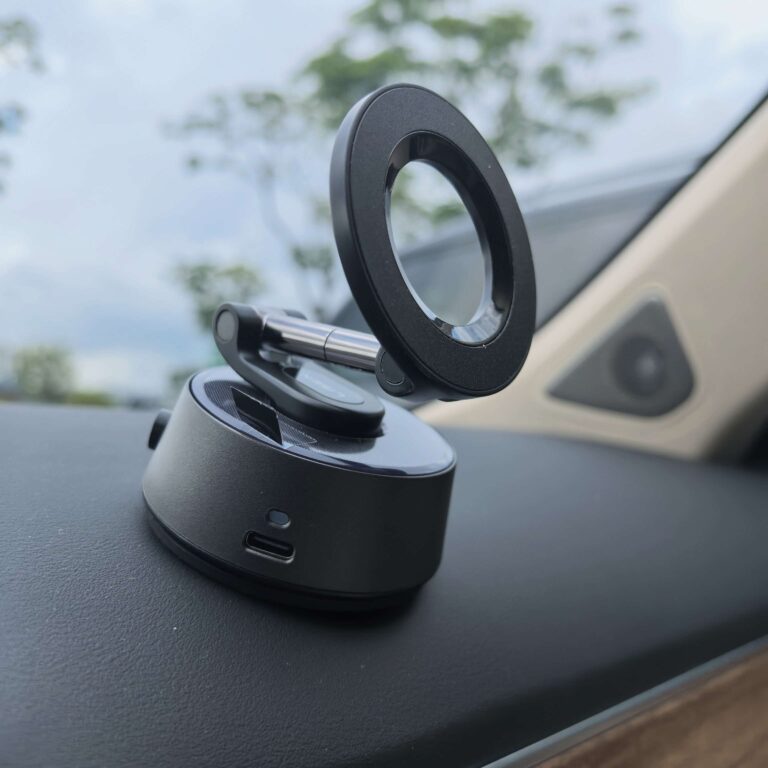
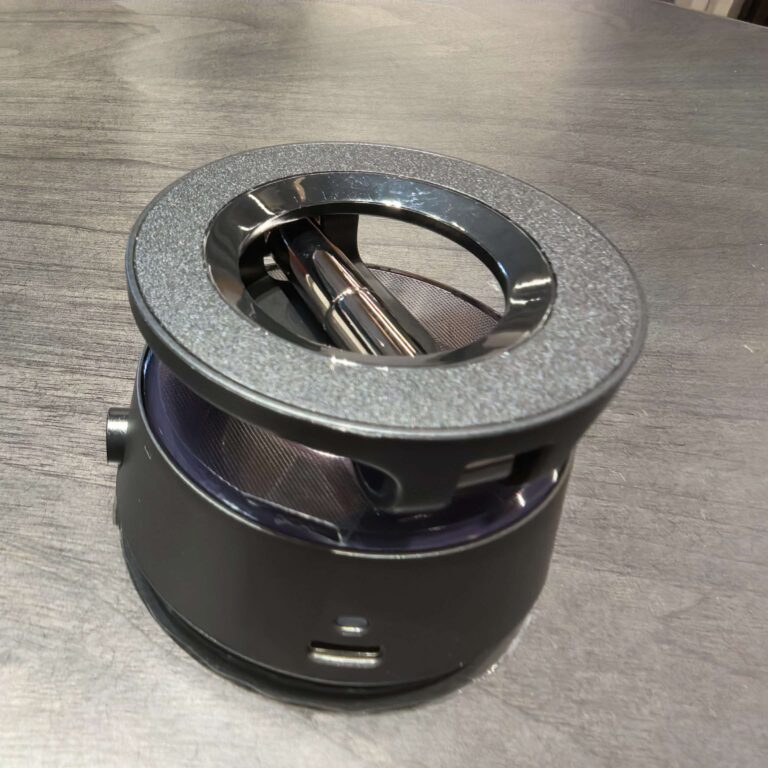
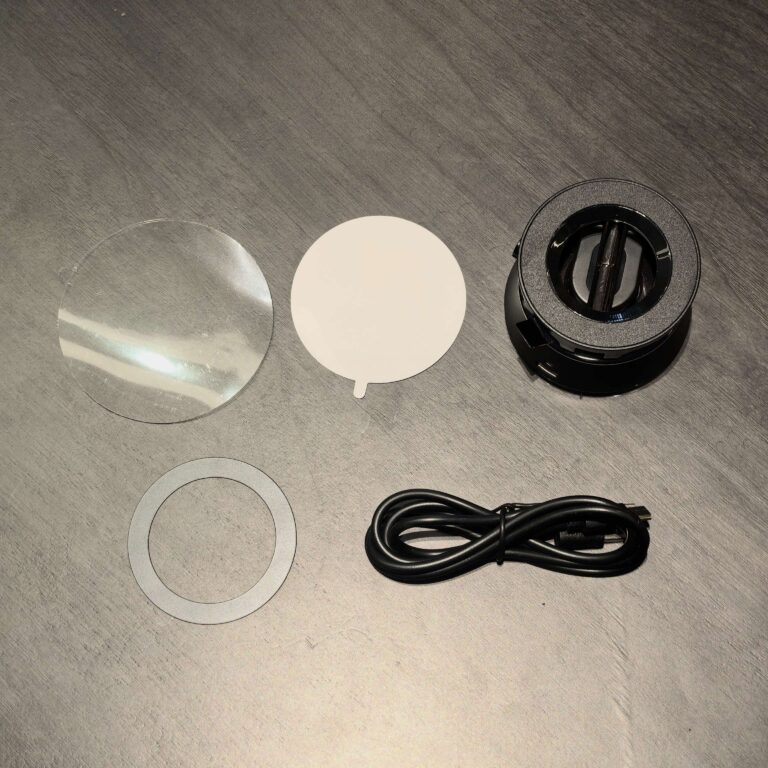
Table of Contents
Quick Verdict
The LISEN Auto Vacuum 3.0 is a good choice for drivers who want a magnetic phone mount without blocking an air vent, provided they have a suitable mounting surface and do not expect wireless charging. Its electric pump established suction quickly, the base stayed in place throughout my 30-day test, and the joints showed no noticeable short-term loosening.
Clean windshield glass remains the easiest recommendation. My unit also held on the AITO M5’s broadly flat but textured, slightly curved dashboard without the pad. That single result does not override LISEN’s instruction to use the pad on textured or curved surfaces or its warning against genuine leather.
Buy it for the strong magnetic connection, flexible viewing angles, and freedom from vent clips. Skip it if you need wireless phone charging, hate intermittent mechanical noise, or would have to rely on the included adhesive base pad to make an unsuitable dashboard work.
| Decision point | 30-day finding |
|---|---|
| Best for | MagSafe or MagSafe-case users with clean glass or another suitable nonporous surface |
| Test distance | Approximately 373 miles over 58 driving hours |
| Suction result | No base sliding or detachment during the test |
| Battery result | No recharge and no red low-battery indicator during 30 days |
| Main limitation | Surface-dependent seal, no wireless phone charging, and occasional pump sound |
| Verdict | Recommended with conditions |
Pros and Cons
What I liked
– The base reached suction in about three to five seconds.
– It did not slide or detach during 30 days of city and highway use.
– The articulated arm did not noticeably sag or loosen during the test.
– The magnetic design worked with an Android phone in a MagSafe-compatible case.
– It leaves the air vents free.
– I did not need to recharge it during the 30-day period.
What could be better
– The mount occasionally makes an audible pump sound as it maintains the seal.
– It holds the phone but does not wirelessly charge it.
– Textured, curved, porous, and leather surfaces require extra caution.
– I could not validate hot parked-car performance because the vehicle was usually kept in indoor parking.
– The review dataset contains meaningful reports of failures after several months, which a 30-day test cannot resolve.
– Initial charge level, full charge time, phone weight, and exact pump-event frequency were not measured.
How I Tested the LISEN Car Phone Holder
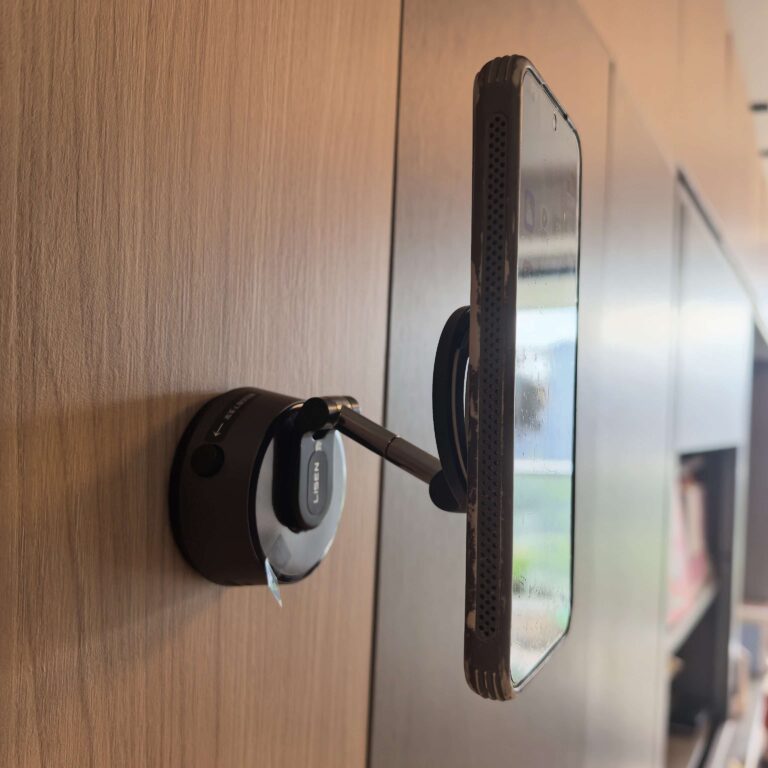
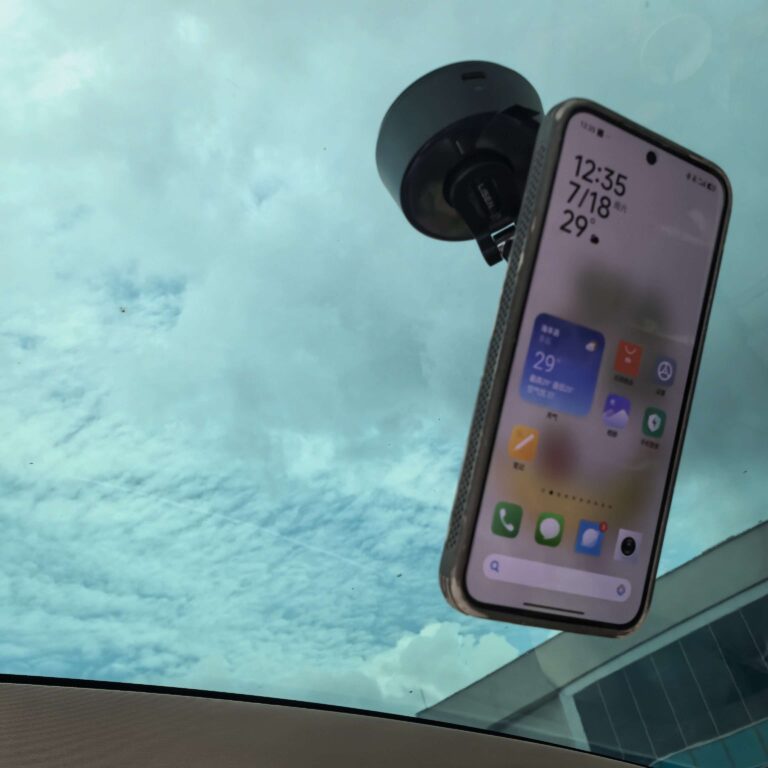
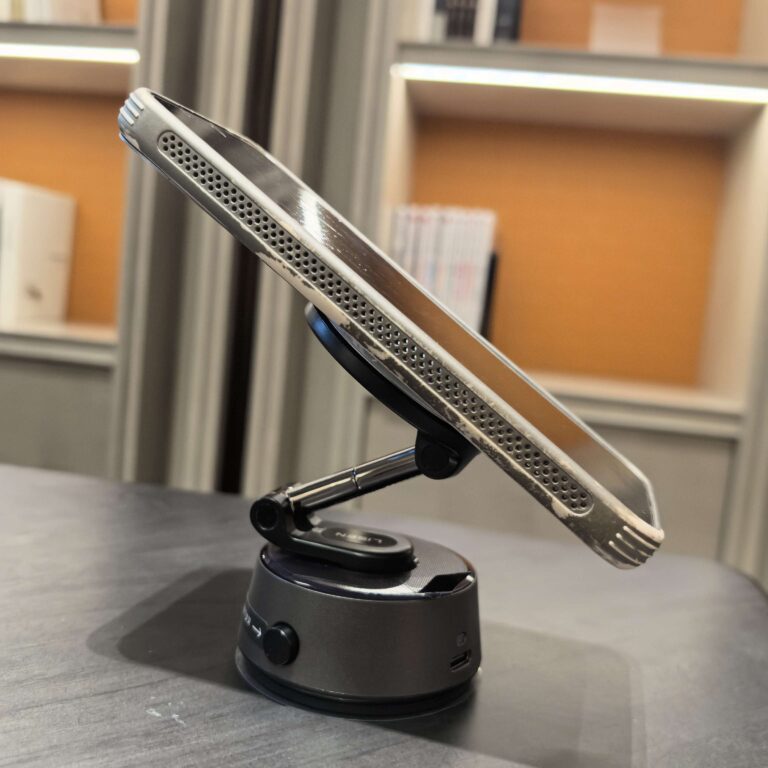
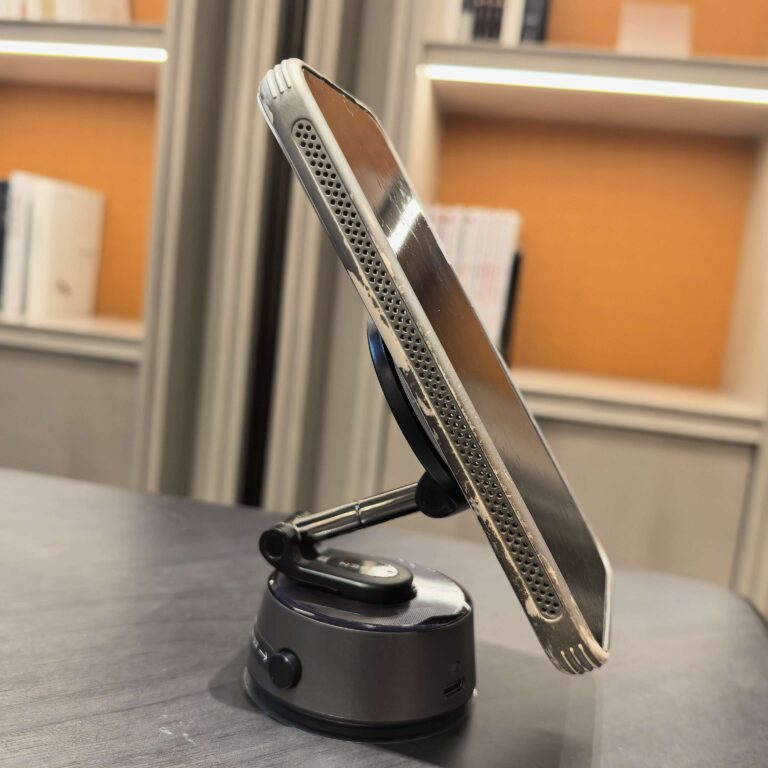
This was a daily-use road test, not a laboratory suction-force test. I handled the phone roughly four to six times per day. I did not hang weights from the head, manufacture extreme heat, or create intentional failures.
| Test factor | Condition | Important limitation |
|---|---|---|
| Vehicle | 2022 AITO M5 | One vehicle and interior design |
| Phone | Xiaomi 14 with OEM MagSafe-compatible case | Phone-plus-case weight was not recorded |
| Test length | 30 days and 58 driving hours | Not a months- or years-long durability test |
| Distance | About 217 city miles and 155 highway miles | No separately logged rough-road mileage |
| Surfaces | Smooth curved windshield glass and a textured, slightly curved dashboard area | Time on each surface was not recorded separately |
| Base pad | Not used | Seller recommends it for textured or curved surfaces |
| Climate | Shenzhen, China; roughly 86°F ambient conditions | Vehicle was usually parked indoors; no prolonged-sun test |
This scope matters. When I describe suction, battery behavior, or durability below, I am describing this unit under these conditions. Claims about high heat, low-battery operation, other phones, and multi-month reliability come from the seller or owner-review analysis and are labeled accordingly.
What 214 Amazon Reviews Reveal
The customer data is encouraging but unusually polarized for a product whose phone-facing magnet often earns praise. The supplied U.S. Amazon review snapshot contained 214 reviews dated August 4, 2025, through July 14, 2026. Of those, 183 were marked Verified Purchase and 29 were marked Vine. Sixty-five percent were four or five stars, while 29.9% were one or two stars.
| Rating | Reviews | Share |
|---|---|---|
| 5 stars | 100 | 46.7% |
| 4 stars | 39 | 18.2% |
| 3 stars | 11 | 5.1% |
| 2 stars | 17 | 7.9% |
| 1 star | 47 | 22.0% |
A keyword-assisted theme review, followed by manual sample reading, found 139 references to suction or surface grip, 102 to magnetic hold or case fit, 77 to the battery, pump, or re-suction behavior, 68 to installation or removal, 65 to durability or time in use, and 54 to adjustability or stability. These categories overlap, so they should not be added together.
Positive reviewers often describe a secure magnet, flexible positioning, and dependable grip on clean glass. Critical reviewers more often mention falling bases, frequent pump cycling, shorter battery intervals, loose joints, or electronics failing after weeks or months. The magnet is rarely the deciding factor; the base seal and how it ages are. Because owner reviews mix climates, cars, cases, and installation quality, I used them to identify risks rather than replace testing.
30-Day Real-World Performance
Suction on Windshield Glass and the Dashboard
The electric base was secure in my test and needed about three to five seconds to establish suction. Once installed, I did not see the base slide, rotate at the surface, or detach during city or highway driving.
Windshield glass remains the safest surface recommendation. The AITO M5 glass is smooth and nonporous, although placement must not obstruct the road and local mounting rules still apply.
The dashboard area was broadly flat but visibly textured and slightly curved. It held without the transparent pad, but grain depth, coatings, and curvature vary. The listing says to use the pad on textured or curved surfaces.
Test a difficult surface with the empty mount first. The pump can restore an existing seal; it cannot make deep texture airtight. LISEN says not to install it on genuine leather.
Magnetic Hold With an Android Phone
The Xiaomi 14 worked with an OEM MagSafe-compatible case, showing that the mount is not limited to iPhones. This is one of the more practical uses for MagSafe accessories on Android: the case provides the magnetic ring alignment, so no separate clamp is needed.
I did not record the combined phone-and-case weight or run a controlled orientation test, so I cannot claim every Pro Max or Ultra-size phone will fit. Large-device owners should check the lower edge, charging-port access, and dashboard clearance.
City and Highway Stability
Across about 217 city miles and 155 highway miles, the base remained stable and the arm did not develop noticeable sag. The total test time was 58 hours, with roughly four to six phone attachment or removal events on a typical day.
I did not log separate rough-road mileage, so this is a daily-driving result rather than a pothole test. Keep the arm only as extended as needed to reduce leverage on the joints and base.
No phone holder removes the need to drive attentively. Set the angle while parked, keep the screen out of the primary road view, and avoid touching the phone while moving.
Automatic Re-Suction and Pump Noise
The pump worked in the background rather than requiring manual intervention. Removing or replacing the phone did not consistently trigger it in my test. I occasionally heard a short pump sound, which indicates the system was restoring the vacuum level.
I did not count pump events on a standardized 30-minute route, measure their duration, or record calibrated sound levels. I therefore cannot tell you that my unit ran a specific number of times per hour. Subjectively, the sound was occasional rather than a constant part of the drive.
Some owners barely notice the pump; others report repeated cycling during calls and shorter charging intervals. Frequent cycling on clean glass is a warning: clean and dry the surface, recharge, shorten the arm, and reinstall. If it continues, the seal or unit may be faulty.
Battery Life: What I Can and Cannot Claim
I did not recharge the mount during the 30-day test, and the red low-battery indicator did not appear. With approximately 1.5 to 2 hours of driving on a typical day, that is a useful real-world result.
This is not a complete runtime measurement because I did not document the starting charge or a from-empty charging time. The unit completed my test without asking for power; that does not guarantee a fixed number of days.
Pump frequency matters: continually correcting a weak seal uses more energy. Owner reports range from roughly monthly charging to much shorter intervals on problematic units.
The internal battery powers only the vacuum system. It does not charge the phone. That distinction deserves to be stated plainly because a powered MagSafe-style mount can look like a wireless charger even when it is not one.
Short-Term Durability
After 30 days, I did not observe arm droop, unintended rotation of the magnetic head, lifting at the edge of the base, or reduced joint resistance. I also did not see an increased need for charging. Those are all positive short-term signs.
That does not settle long-term reliability. A 30-day test cannot predict battery aging, motor life, or hinge wear over a year. Note the mount’s normal pump frequency and joint feel, then watch for changes.
Short-Term Durability
This was not a parked-car heat test. Ambient conditions were around 86°F, but the vehicle was usually stored in indoor parking and rarely sat through prolonged direct sun. I did not collect before-and-after surface temperatures or observe the mount after hours in a heat-soaked cabin.
Owner heat reports are mixed and identify a risk, not a result from my test. Hot-climate drivers should test the intended location during the return window and watch for increased pump activity after parking.
Specs That Actually Matter
Marketing numbers are less useful than the design consequences behind them:
– **Active vacuum maintenance:** The pump can reinforce a weakening seal without a manual lever. It also adds a battery, motor, sensor, and occasional noise.
– **Four-axis arm:** LISEN advertises 1,440 degrees of combined movement. The practical benefit is choosing height, reach, tilt, and phone orientation; the trade-off is more joints that can eventually wear.
– **MagSafe-style magnetic attachment:** Compatible iPhones and MagSafe cases attach directly. Other phones can use a compatible case or the included ring.
– **No wireless phone charging:** A separate charging cable is required.
– **Surface restrictions:** Clean, smooth glass is the safest bet. The seller recommends the supplied pad for textured or curved surfaces and excludes genuine leather.
– **Periodic mount charging:** LISEN advises periodic charging and uses a red indicator for low power. Actual intervals depend on seal quality and use.
– **Seller-stated support:** The listing advertised a two-year warranty when checked. Verify the current seller and terms before buying.
I did not verify the brand’s extreme magnetic-lift claim; ordinary driving is the more relevant test.
Who Should Buy It—and Who Should Skip It
Buy it if
– You have clean windshield glass or a suitable flat, nonporous dashboard area.
– You use an iPhone with MagSafe or an Android phone with a MagSafe-compatible case.
– You want one-hand magnetic attachment without blocking an air vent.
– You value flexible positioning more than built-in phone charging.
– An occasional brief pump sound does not bother you.
– You are willing to monitor charging and changes in suction behavior.
Skip it if
– Your only mounting area is genuine leather, deeply textured, sharply curved, or porous.
– You need the mount to wirelessly charge your phone.
– You want a completely silent, battery-free accessory.
– You are unwilling to use an adhesive base pad when the surface requires it.
– Your local rules or vehicle layout do not allow a safe windshield position.
– You want proven multi-year reliability rather than a more complex active-suction design.
LISEN vs. Other Phone Holders for Your Car
I did not conduct a side-by-side competitor test, so this comparison is based on product design and independent category testing—not claims that I drove with every alternative. Car and Driver evaluates mounts using mounting strength, phone grip, adjustability, magnet strength, and charging operation. Those are the right decision points here too.
| Mount type | Best reason to choose it | Main trade-off |
|---|---|---|
| LISEN Auto Vacuum 3.0 | Active re-suction, magnetic convenience, and flexible glass/dash placement | Battery upkeep, pump sound, surface limits, and no phone charging |
| Manual suction clamp | Universal phone fit without electronics or a magnetic case | Usually bulkier and slower to load |
| Wireless MagSafe vent mount | Holds and charges a compatible phone | May block airflow, stress a vent, or offer less positioning freedom |
| Cupholder mount | Avoids suction and vent compatibility problems | Consumes a cupholder and often places the screen lower |
| Passive vacuum magnetic mount | Silent operation with fewer electronic failure points | Cannot automatically restore a weakening seal |
Choose a wireless vent mount for charging or a cupholder mount when no safe glass or dashboard position exists. LISEN makes sense when flexible placement and active suction matter more.
Installation and Buying Checklist
1. Choose the surface before ordering. Find a safe, clean location that does not block the road, gauges, airbags, controls, or infotainment display.
2. Check local mounting rules. Windshield placement restrictions vary.
3. Inspect the material. Smooth glass is ideal. Do not use genuine leather. Follow LISEN’s pad instructions for texture or curvature.
4. Clean and dry the area. Dust, oil, moisture, and dashboard dressing can undermine a seal.
5. Charge the mount. Starting with known battery status makes installation problems easier to diagnose.
6. Let the pump finish. My unit took about three to five seconds to establish suction.
7. Test the empty mount first. Make sure the base is stable before attaching an expensive phone.
8. Check the real phone and case. Verify magnetic strength, lower-edge clearance, charging-port access, and both useful orientations while parked.
9. Keep the arm reasonably short. Less extension means less leverage and movement.
10. Listen for a behavior change. Occasional re-suction can be normal; persistent cycling deserves cleaning, charging, relocation, or a warranty claim.
11. Use the release control. Do not remove the base by pulling on the arm.
12. Test during the return window. Include the warmest normal conditions your vehicle will realistically encounter.
Is the LISEN Auto Vacuum 3.0 Worth It?
It is worth considering when the mounting surface fits the design and you want active suction more than wireless charging. During my 30-day test, the product delivered the two things that matter most: the base remained attached, and the articulated structure did not loosen.
Value drops if your dashboard requires an adhesive pad, pump sounds annoy you, or you expected phone charging. A passive mount has fewer components to age; a wireless vent mount does more for phone battery life. LISEN’s advantage is flexible glass or dash placement with active seal monitoring.
Do not use an old quoted sale price to judge value. Check the current listing, seller, return policy, and warranty. Then compare those terms with the cost of a simpler mount that better matches your car.
Final Verdict
After 30 days, 58 driving hours, and approximately 373 miles, I recommend the LISEN Auto Vacuum 3.0 with clear conditions. It attached in roughly three to five seconds, stayed in place on the tested windshield and dashboard locations, and showed no short-term joint sag, base-edge lifting, unintended magnetic-head rotation, or need for recharging.
The conditions matter. Indoor parking means this review does not prove hot-sun performance. I also did not reach low battery, measure exact pump frequency, weigh the phone and case, or test beyond 30 days.
Buy it if you have a suitable surface, use a compatible magnetic case, and accept occasional re-suction noise and separate phone charging. Skip it if your interior is leather or heavily textured, you need wireless charging, or you prefer the simplicity of a silent mechanical mount.
That is the honest conclusion of this LISEN car phone holder review: the Auto Vacuum 3.0 worked well in the conditions I could test, but it is a surface-dependent car accessory—not a universal answer for every vehicle.
FAQ
No. The battery powers the electric vacuum pump only. The mount is MagSafe-compatible for magnetic attachment, but it is not a wireless charger.
LISEN says about once a month under its lab conditions, with roughly a one-hour recharge time. Customer reports range from several weeks to much shorter intervals when the pump cycles frequently or the battery ages.
An occasional sound means the pump is restoring vacuum pressure. If it happens repeatedly, clean the base and move the mount to a smoother, flatter surface.
Not reliably with direct suction. LISEN says to use the included transparent base pad on textured or curved surfaces. The mount should not be used on genuine leather.
Yes, but most Android phones need a MagSafe-compatible case or the included metal ring. Check alignment and case compatibility before permanent installation.
The magnet is one of the product’s clearest strengths, especially with a proper MagSafe case. However, a tall Pro Max or Ultra-class phone can run into the mount base or dashboard at certain angles. Check physical clearance as well as magnetic strength.
Yes, smooth glass is one of its best surfaces. Position it only where it does not obstruct your view and where local rules allow windshield-mounted accessories.
Active re-suction can compensate for some pressure changes, but hot-weather experiences vary: the mount may remain stable, or it may begin cycling more often and eventually lose suction. A clean glass surface gives it the best chance.
The phone mount, instruction manual, transparent nano base pad, and magnetic ring.
Remove it with the release control, clean and dry the suction surface, recharge the unit, and try a flatter location. If frequent cycling continues on clean glass, use the current return or warranty process rather than trusting it with your phone.